

National Monument
Hovenweep National Monument
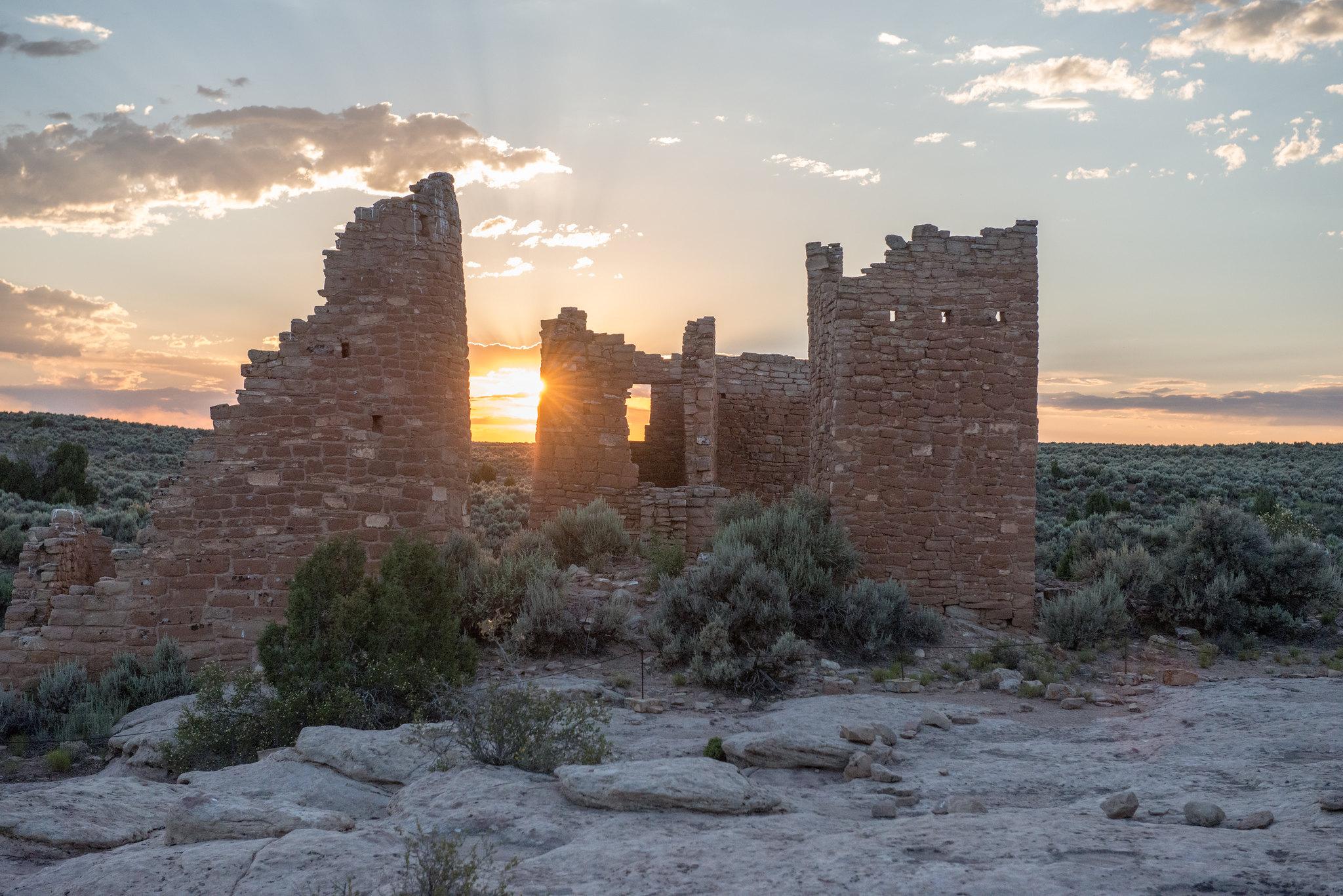
Hovenweep preserves six prehistoric sites built between 1200 and 1300 CE which may have served as ceremonial centers. Explore a variety of structures, including multistory towers perched on canyon rims and balanced on boulders. The construction and attention to detail will leave you marveling at the skill and motivation of the builders.
Official NPS pageInformation: Voicemail not functioning
The voicemail for the main park phone line (970-562-4282) is not functioning reliably. People are advised to call during business hours in order to speak with a ranger.
Information: Hovenweep has gone cashless
The park now accepts only mobile or electronic payments for entrance & camping fees. You can reserve campsites and buy entrance passes on Recreation.gov, or only use debit/credit cards to pay in person.
Hours
Hovenweep National Monument is typically open year-round. Park trails are open only sunrise to sunset.
Entrance fees
Entrance - Private Vehicle: $20.00 · Entrance - Motorcycle: $15.00 · Entrance - Per Person: $10.00
Getting there
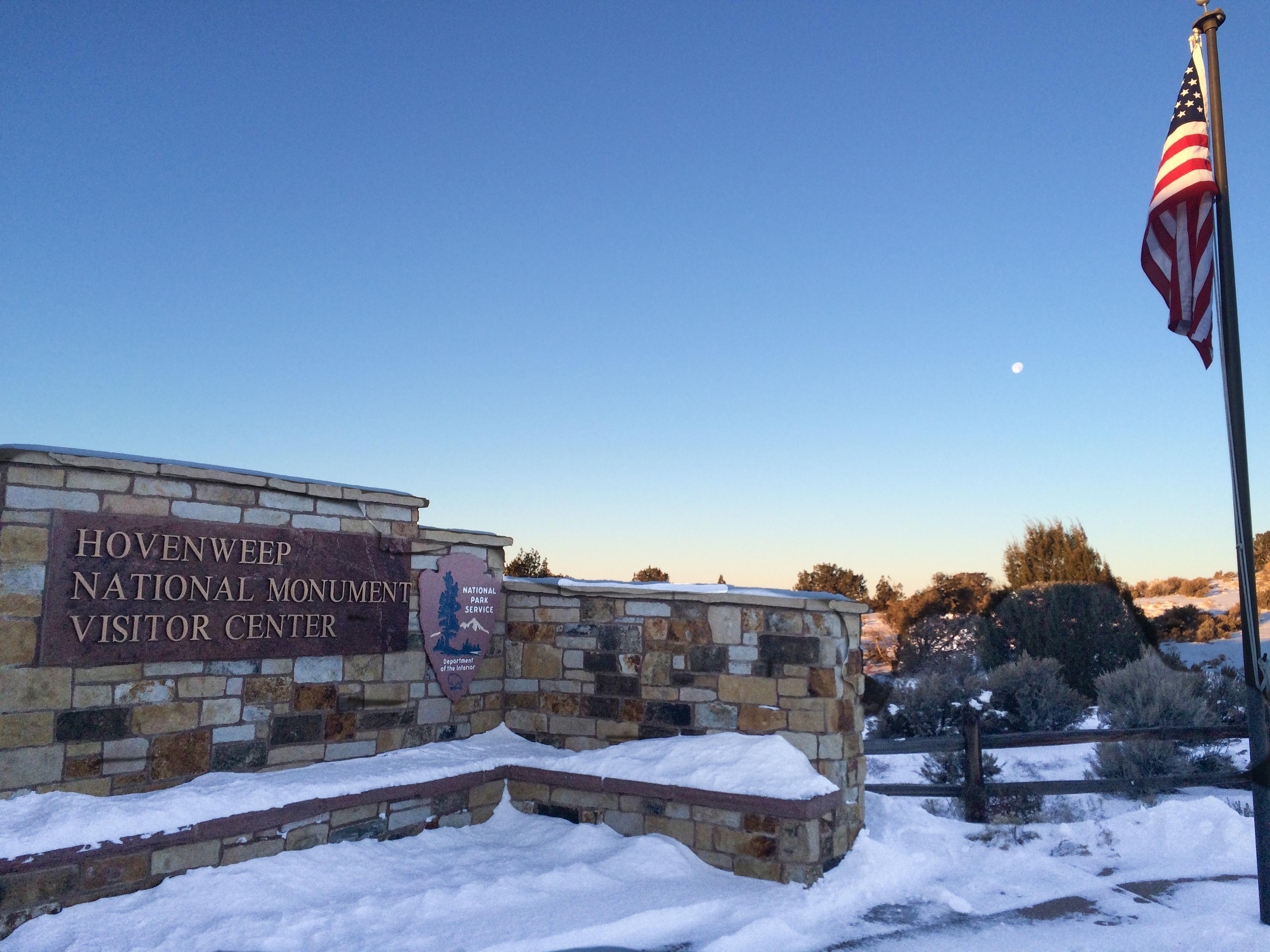
The Hovenweep Visitor Center is located 40-45 miles from Cortez, CO, and Blanding and Bluff, UT. If you use a GPS or a navigation app on your phone, make sure that you have set your destination to the Hovenweep National Monument Visitor Center, and that your route matches the directions on our website. Alternate routes to the visitor center, and any road to our remote, outlying units, can be very rough.
Camping in this park
Things to do
Hike the Holly Trail
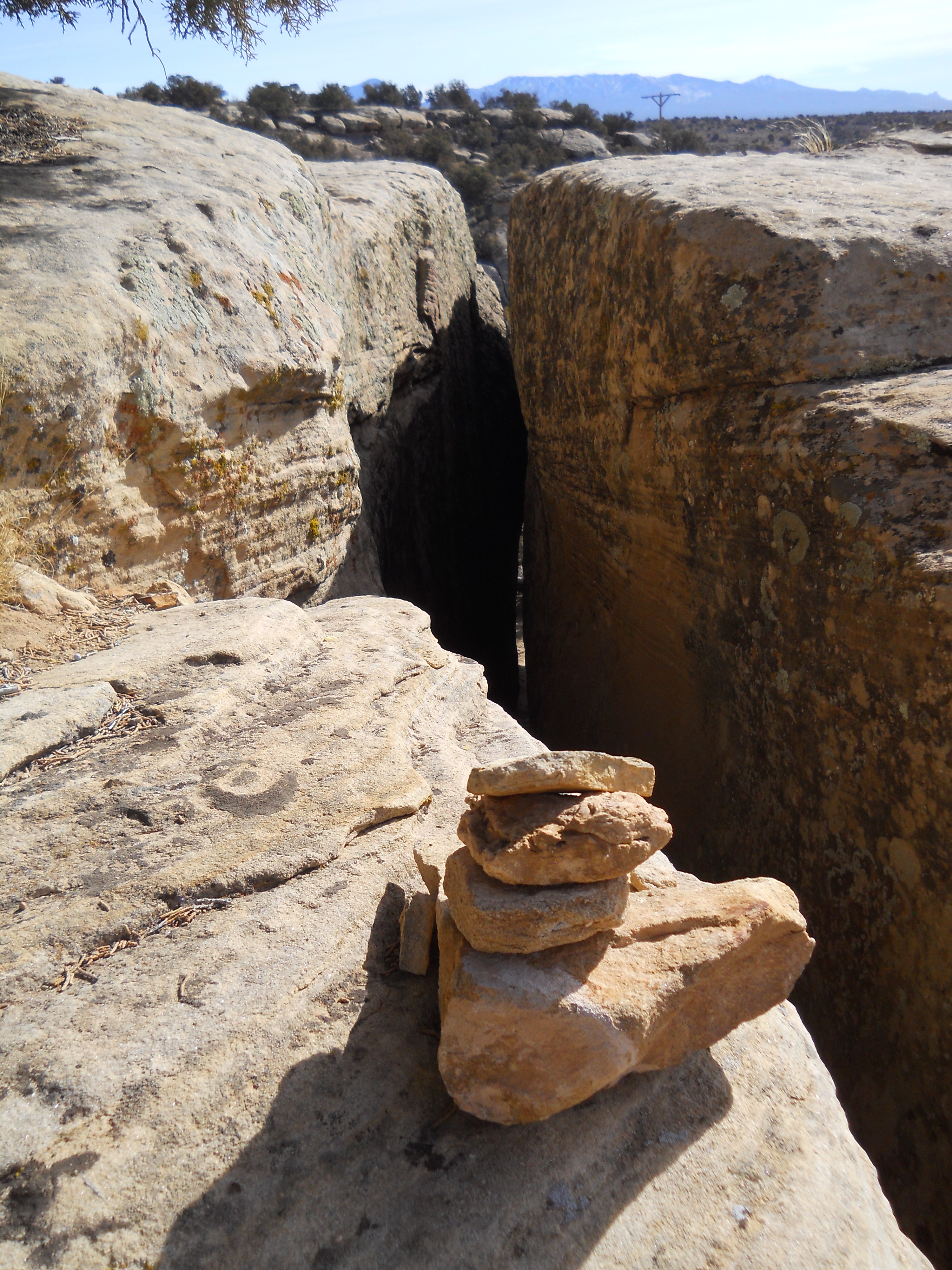
The Holly Trail (8 miles, roundtrip) offers the chance to explore away from roads and busier trails and stretch your legs with a longer hike. Gain new perspective as you traverse a canyon floor, squeeze through slot canyons, and take the long way around. At the end, your reward is reaching the towering remains and petroglyphs at the Holly Group.
Hike the Square Tower Group Loop Trail
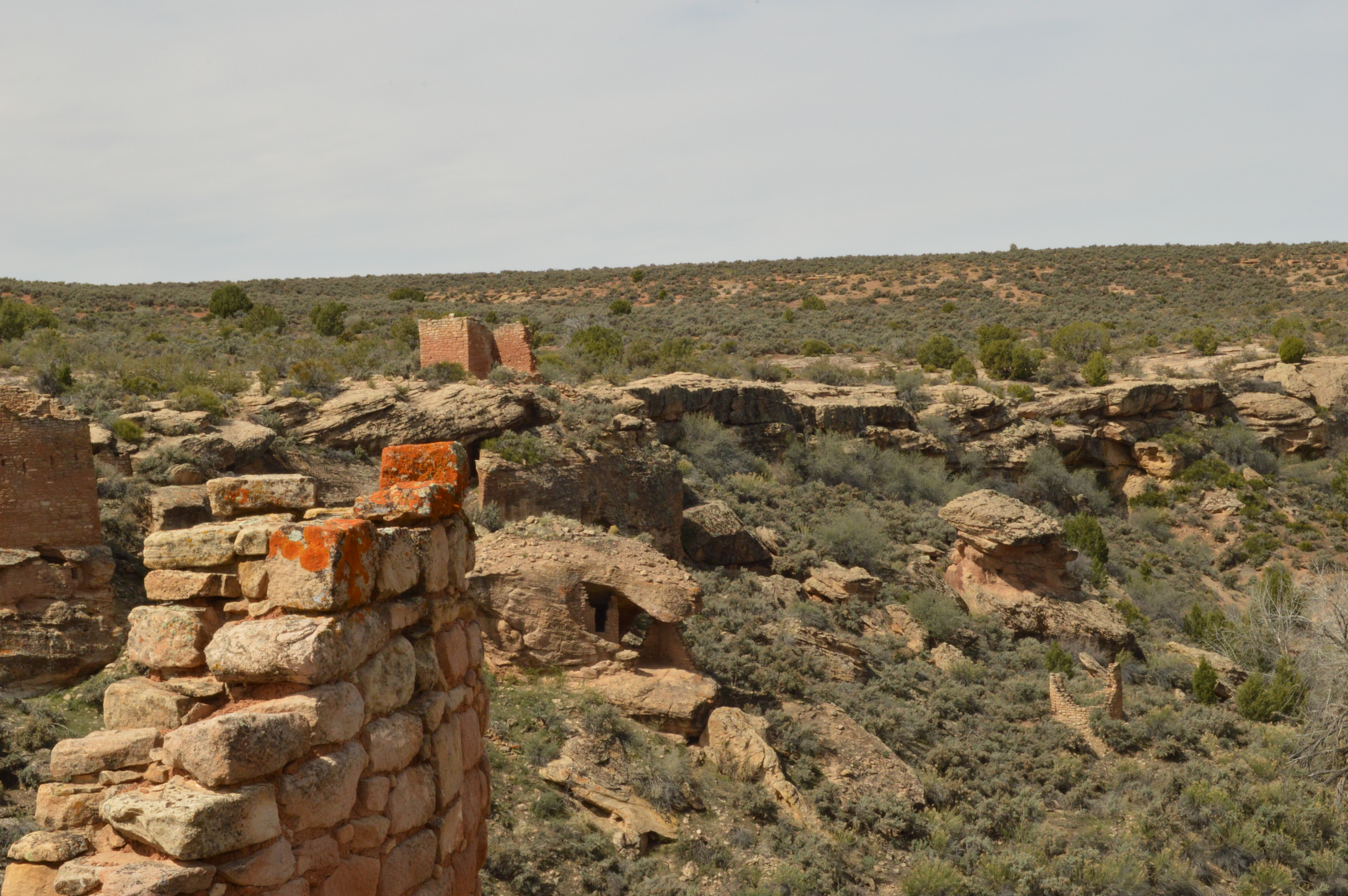
Explore the ancestral Pueblo world with a hike around the Square Tower Group. Follow the two-mile, primitive loop trail along the canyon rim to see the famous Square Tower, Hovenweep Castle, and eight other standing structures. A trail guide offers insight into the ancestral Puebloan lifestyle. Just steps from your vehicle, you can enjoy sweeping vistas and ancient dwellings.
Walk to the Square Tower Group Overlook
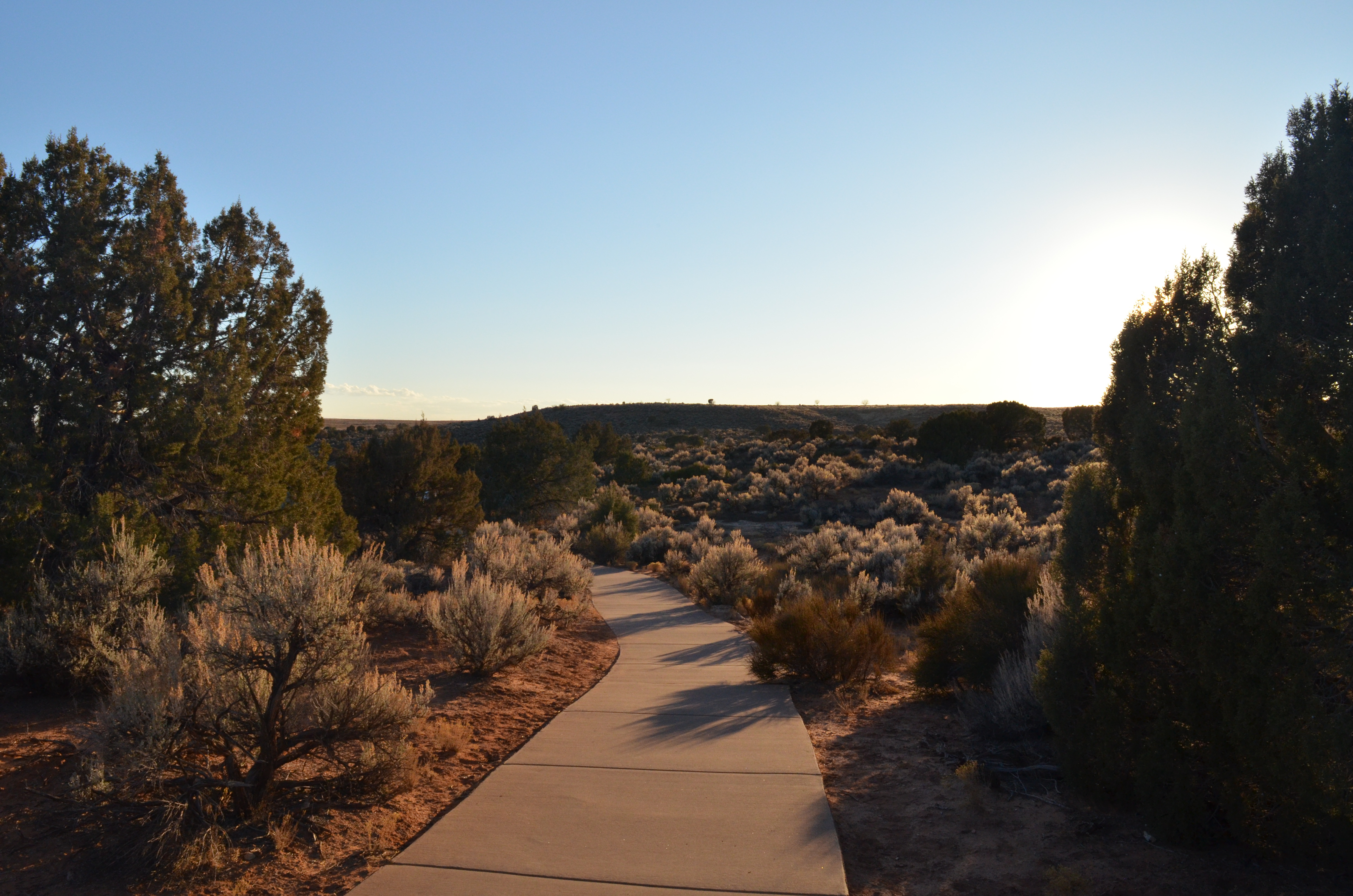
Take a paved trail to this canyon overlook and see what Hovenweep has to offer! Sweeping views of sage country and ancestral Puebloan structures are just yards away from the visitor center. This trail is perfect for any season or time of day and for anyone hoping to get a good view of Hovenweep without much time or distance.
Places to see
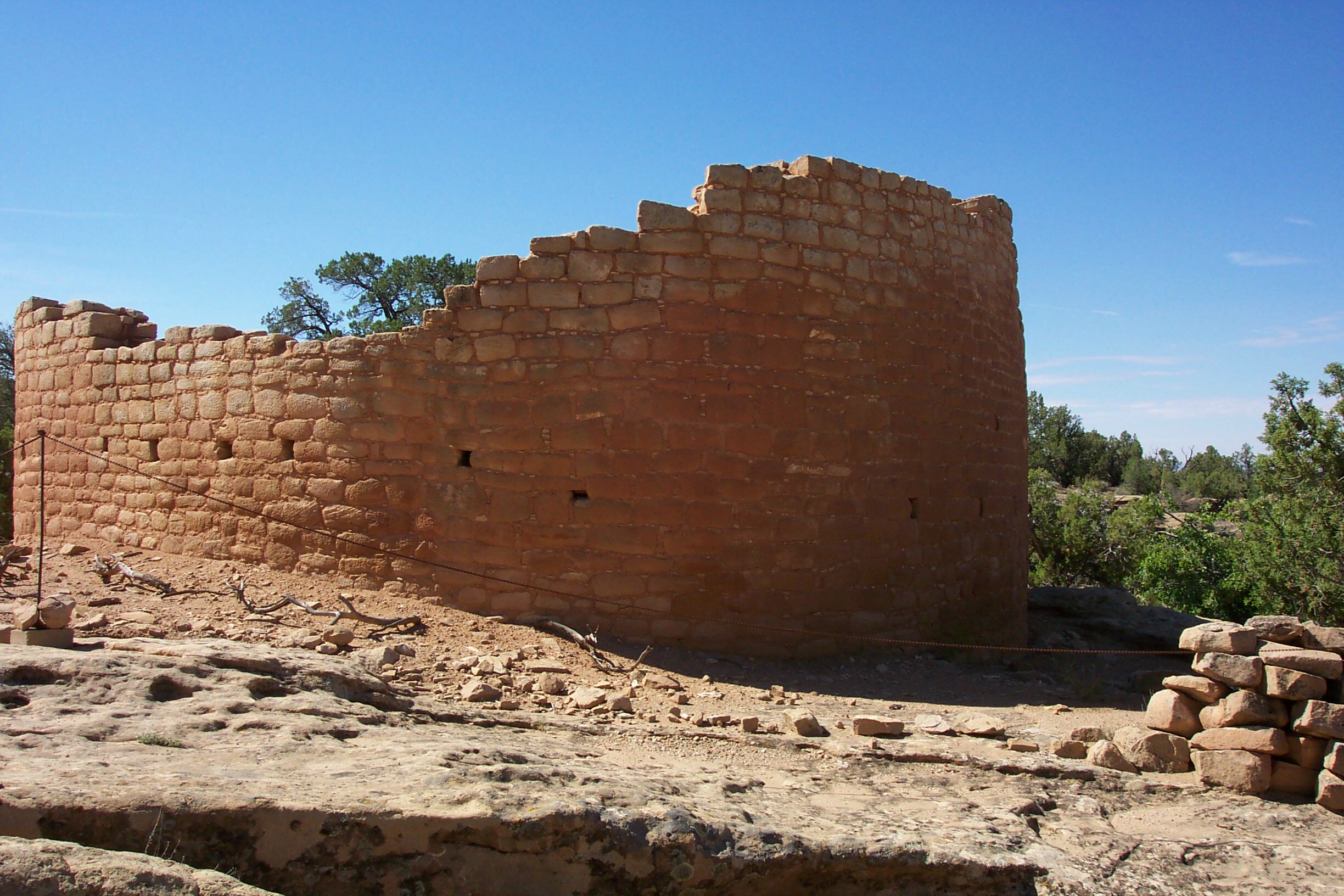
Horseshoe House
Horseshoe House is a D-shaped building with a secondary round structure inside the middle portion of the building. Since there seems to be no exterior entry in any of the walls, more than likely entry was through a roof-top hatchway. The unique stone towers and other buildings at Hovenweep are extremely fragile. To help preserve them, please remain on trail and do not enter or touch any structure.
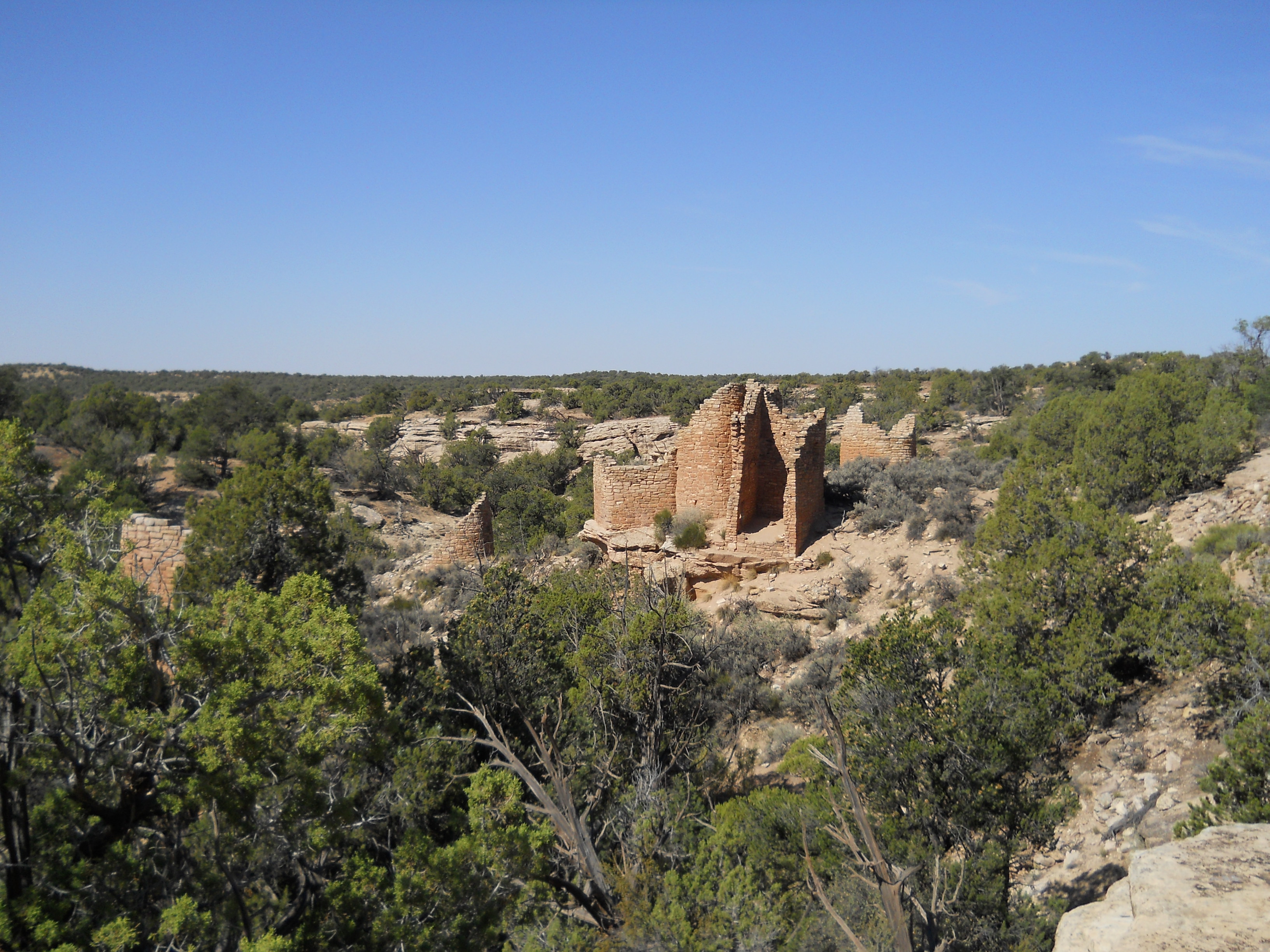
Cutthroat Castle
Cutthroat Castle consists of room blocks and towers that are located on low terraces in the canyon, but not at the canyon head, which makes them unique compared to other Hovenweep sites. The Cutthroat Group also appears to have a large number of kivas relative to other building types. Puebloan kivas are usually built into the earth, and are typically round. An exception is the kiva incorporated into Cutthroat Castle, which rests on top of a boulder. The unique stone towers and other buildings at Hovenweep are extremely fragile. To help preserve them, please remain on trail and do not enter or touch any structure.
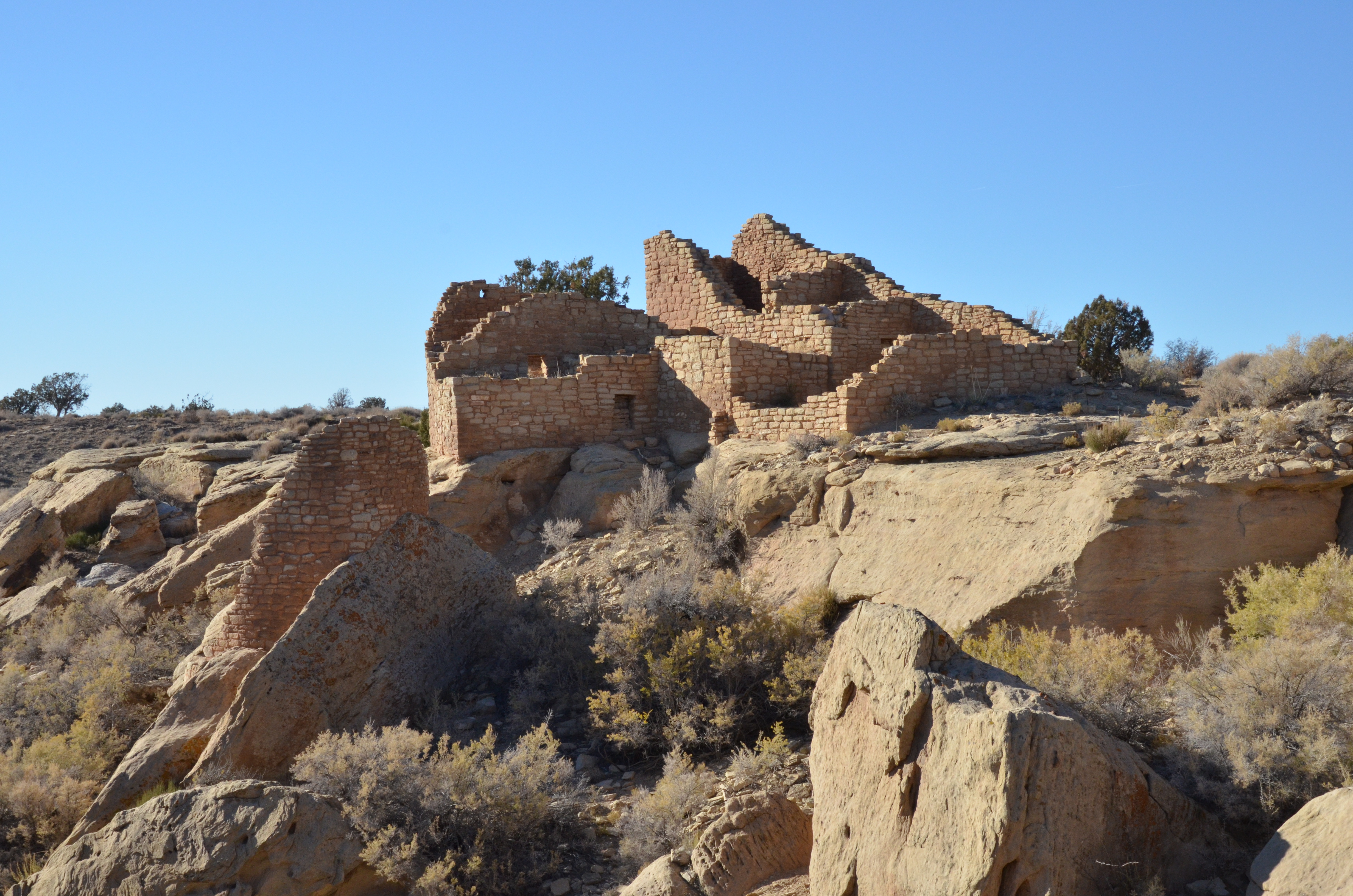
Cajon Unit
The Cajon Unit’s structures are situated at the head of a small canyon and indicate that 80 to 100 people may have lived here. Under a ledge in the canyon below are several small structures that may have been built to protect and store water from the spring. On the western slope of the canyon stand the remains of a remarkable circular tower that conforms perfectly to the shape of three large, irregular boulders. This round structure on a completely uneven surface demonstrates the skill and determination of the ancestral Puebloans who lived at Hovenweep. The unique stone towers and other buildings at Hovenweep are extremely fragile. To help preserve them, please remain on trail and do not enter or touch any structure.
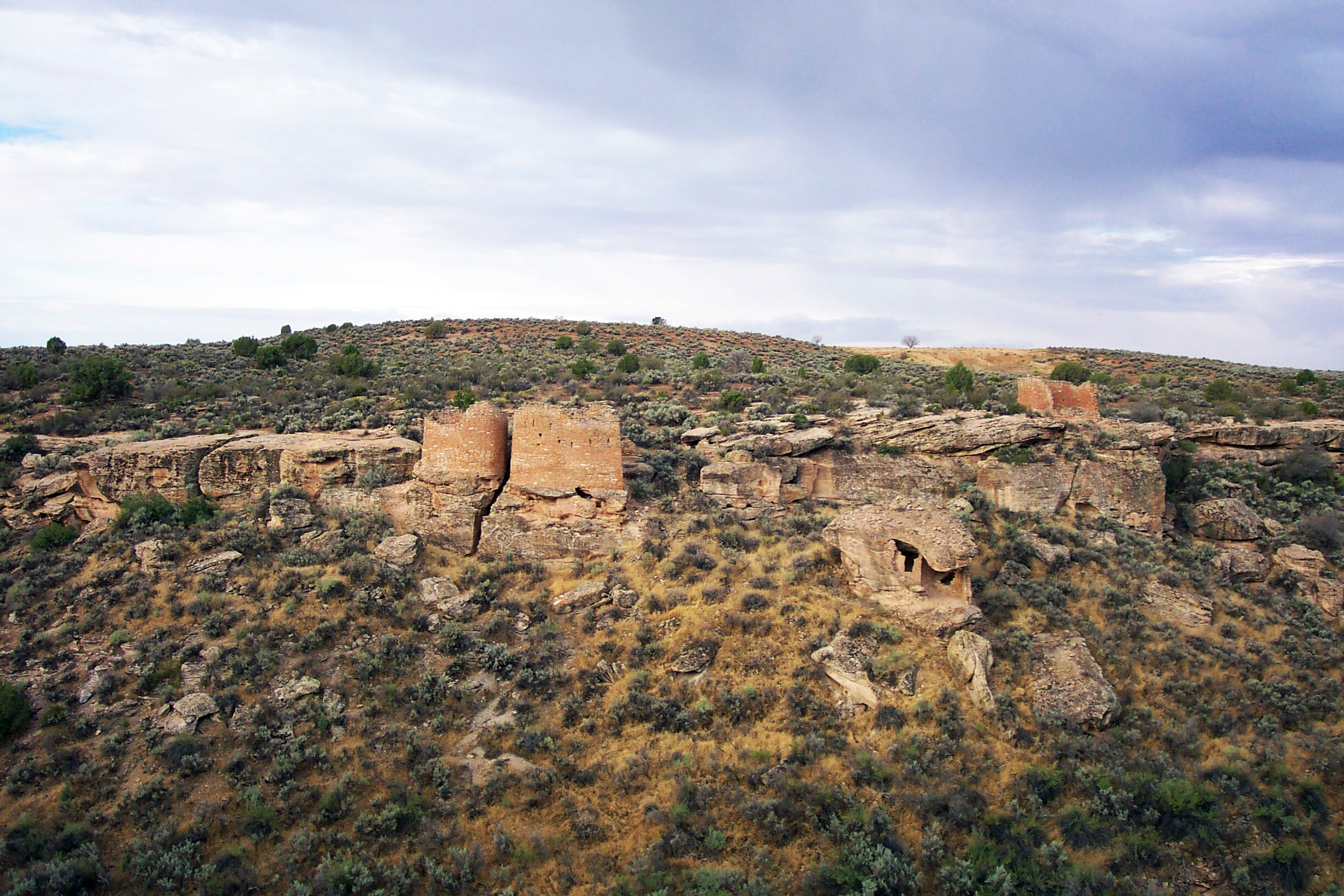
Eroded Boulder House View
Eroded Boulder House is another unique structure visible in the Square Tower Group canyon. As the name suggests, Eroded Boulder House sits under a huge rock and incorporates the eroded base beneath as part of its roof and walls. A few shaped stones on top of the boulder are evidence of a tower built above. From an opening in the north wall of the structure, Tower Point is visible. Eroded Boulder House is best seen from across the canyon at this viewpoint. The trail leads around the rim of the canyon near the structure but entering the canyon or getting closer to the structure is not allowed to protect its fragile nature. The unique stone towers and other buildings at Hovenweep are extremely fragile. To help preserve them, observe proper site etiquette. Remain on marked trails. Do not enter or touch any structure. Do not touch or disturb any artifacts, including pottery sherds, arrow points, or rock art. Once removed from context, the story they tell is gone forever.
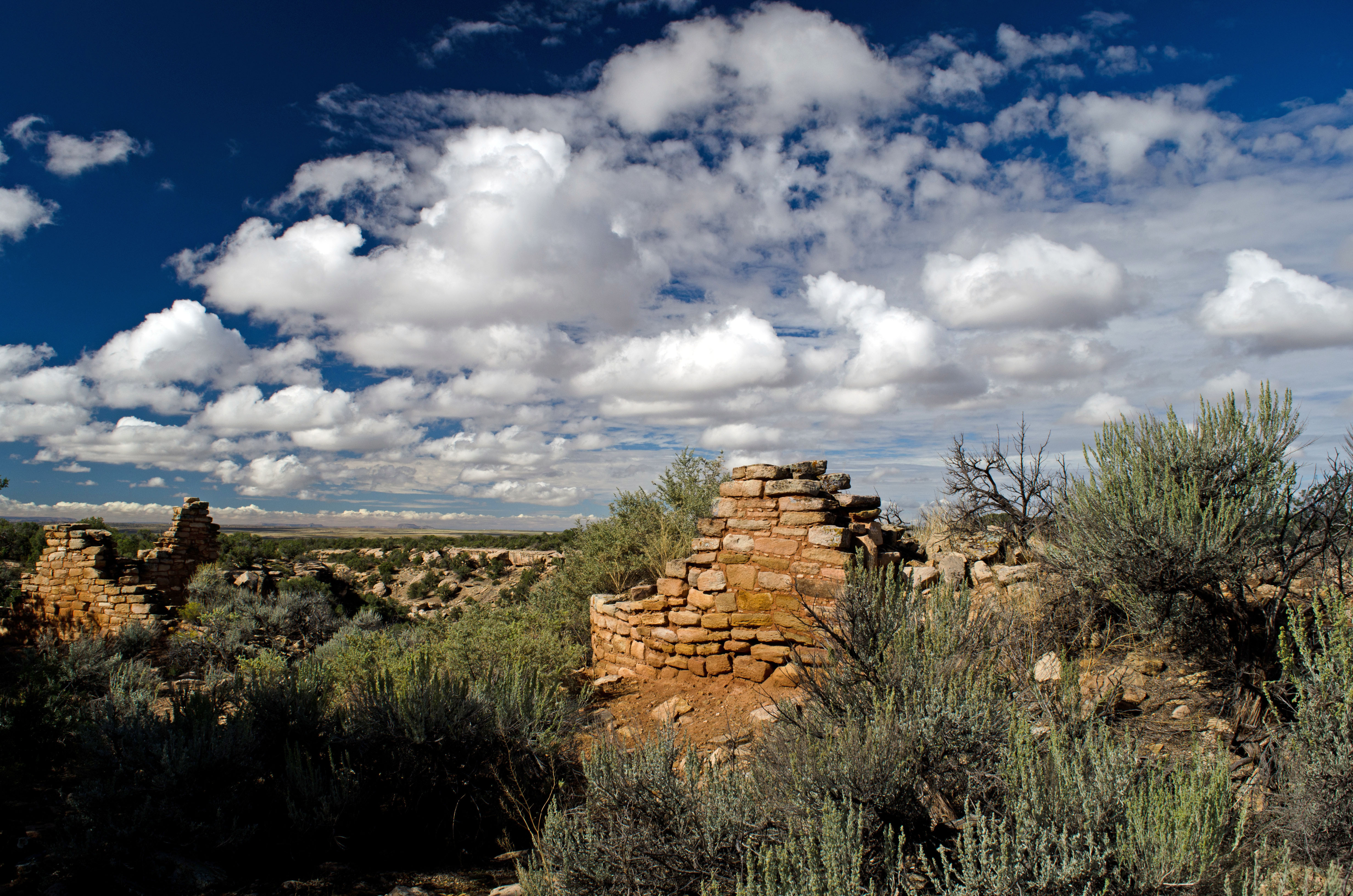
Hackberry Unit
Today Hackberry is represented by a few walls and mounds. Archeologists speculate that Hackberry’s community may have held one of the largest populations of all the Hovenweep units during the Pueblo III Period. As many as 250-350 people may have lived here. Hackberry's remaining walls and rubble remind us that the standing structures can only tell us so much of the ancestral Pueblo story. The unique stone towers and other buildings at Hovenweep are extremely fragile. To help preserve them, please remain on trail and do not enter or touch any structure.
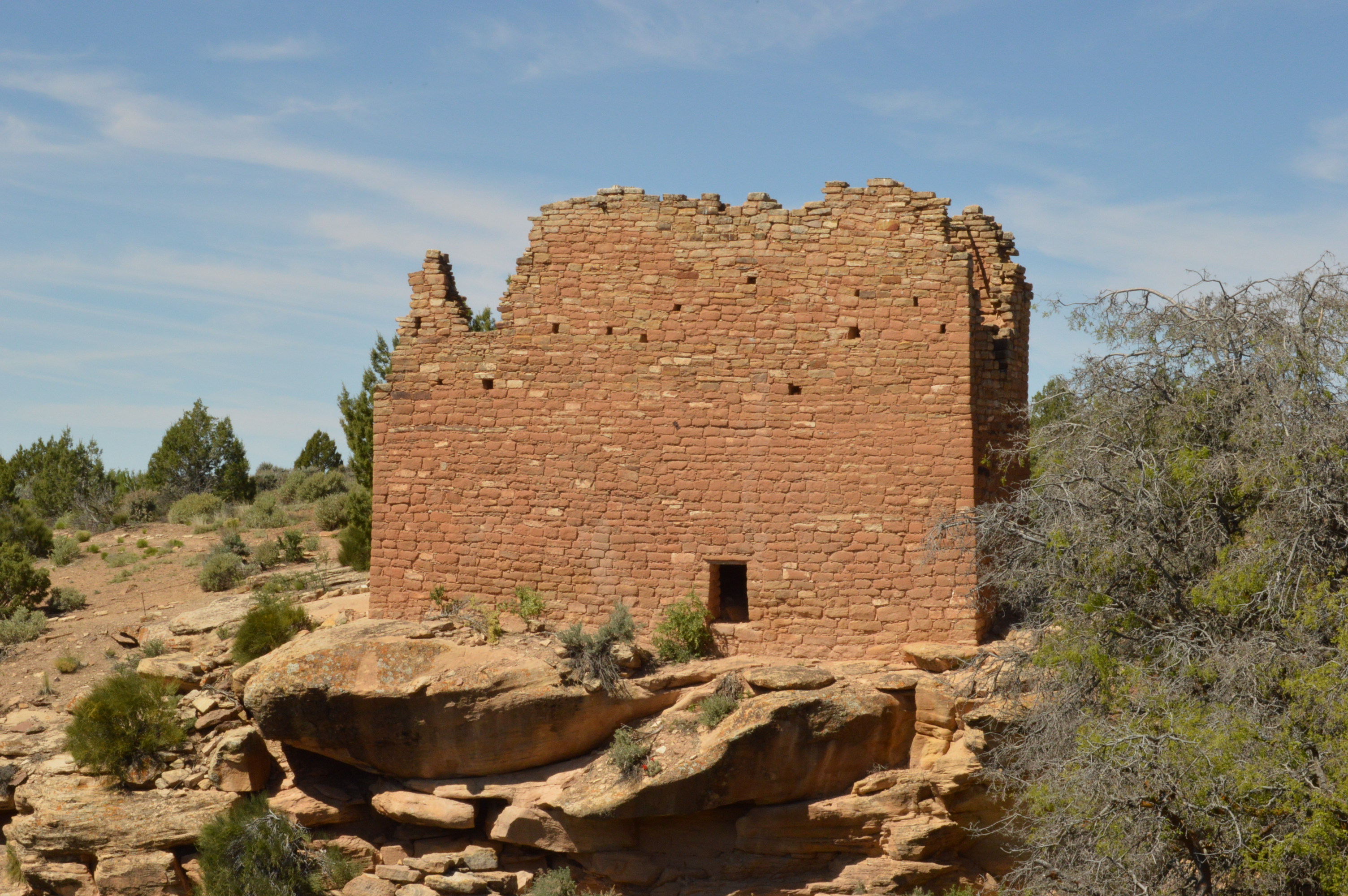
Holly House
Holly House, located on the west rim of the canyon, is a multi-story building that was probably the largest structure in the community. Standing on the trail looking south, watch for two wooden beams at the top of Holly House. These are original beams from 800 years ago, not placed during modern stabilization by the National Park Service. These beams have helped us understand how and when the structures were built. The unique stone towers and other buildings at Hovenweep are extremely fragile. To help preserve them, please remain on trail and do not enter or touch any structure.
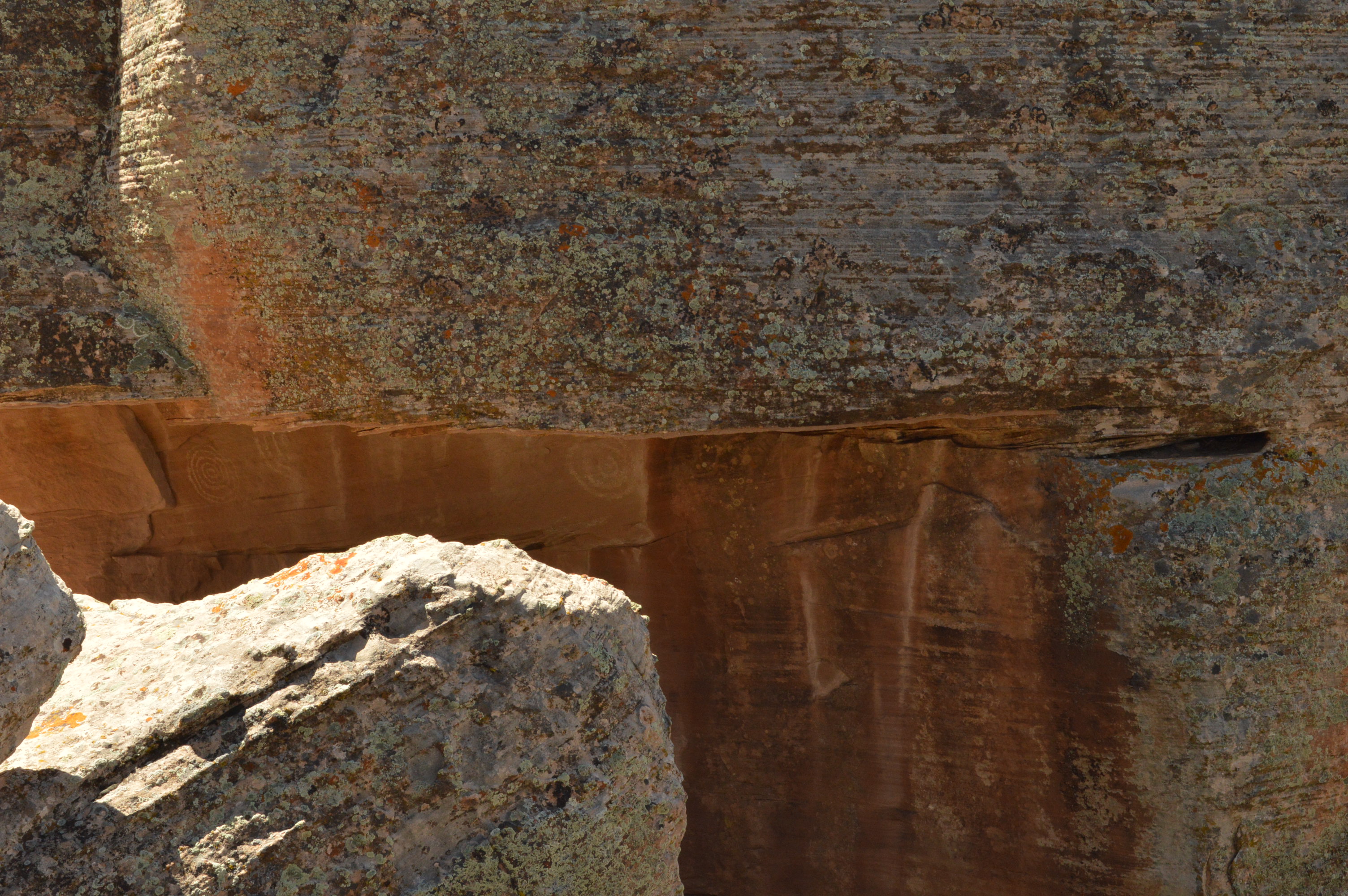
Holly Petroglyph Panel
We believe the ancestral Puebloans at Holly used this petroglyph panel to mark the summer solstice. Just below the canyon rim, two large boulders form a narrow opening. On the summer solstice, a beam of light enters the narrow opening and lights up the boulder face. The ancestral Puebloans observed this natural event and added their own marks - spiral and concentric circle petroglyphs on the boulder face. On the summer solstice, and the days before and after, the sun beam bisects the petroglyphs. The unique stone towers and other buildings at Hovenweep are extremely fragile. To help preserve them, please remain on trail and do not enter or touch any structure.
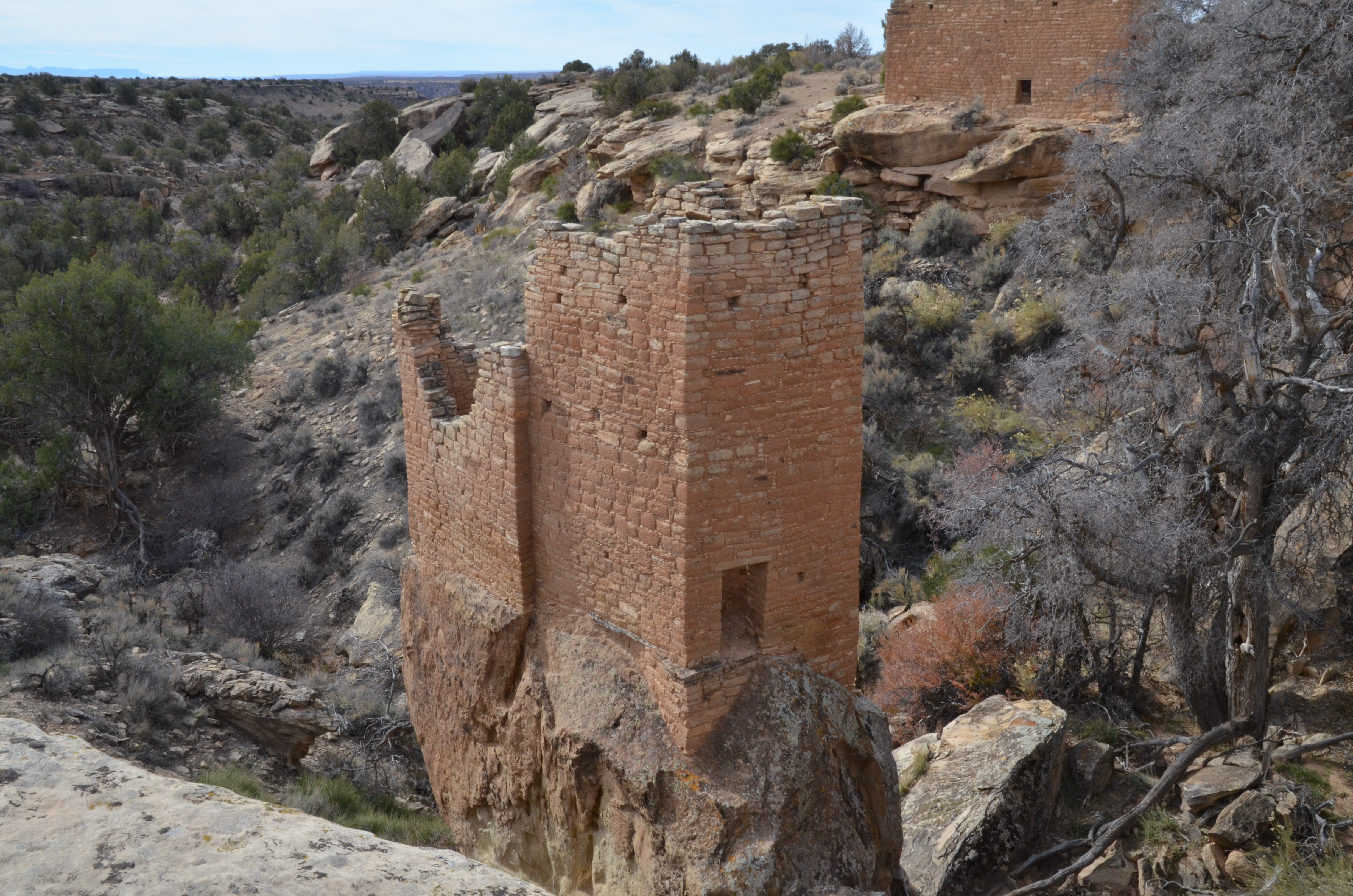
Holly Tower
Holly Tower is part of the Holly Unit, located in Keeley Canyon. It is a large multi-story tower built atop a large sandstone boulder in the canyon, instead of the canyon rim. It was built sometime after 1200 AD and it appears it was constructed without outside scaffolding. Each floor was built from the inside, one floor at a time, building upward. Looking at Holly Tower, you can still see the steps and hand-holds that were pecked into the boulder below the entrance. The unique stone towers and other buildings at Hovenweep are extremely fragile. To help preserve them, please remain on trail and do not enter or touch any structure.
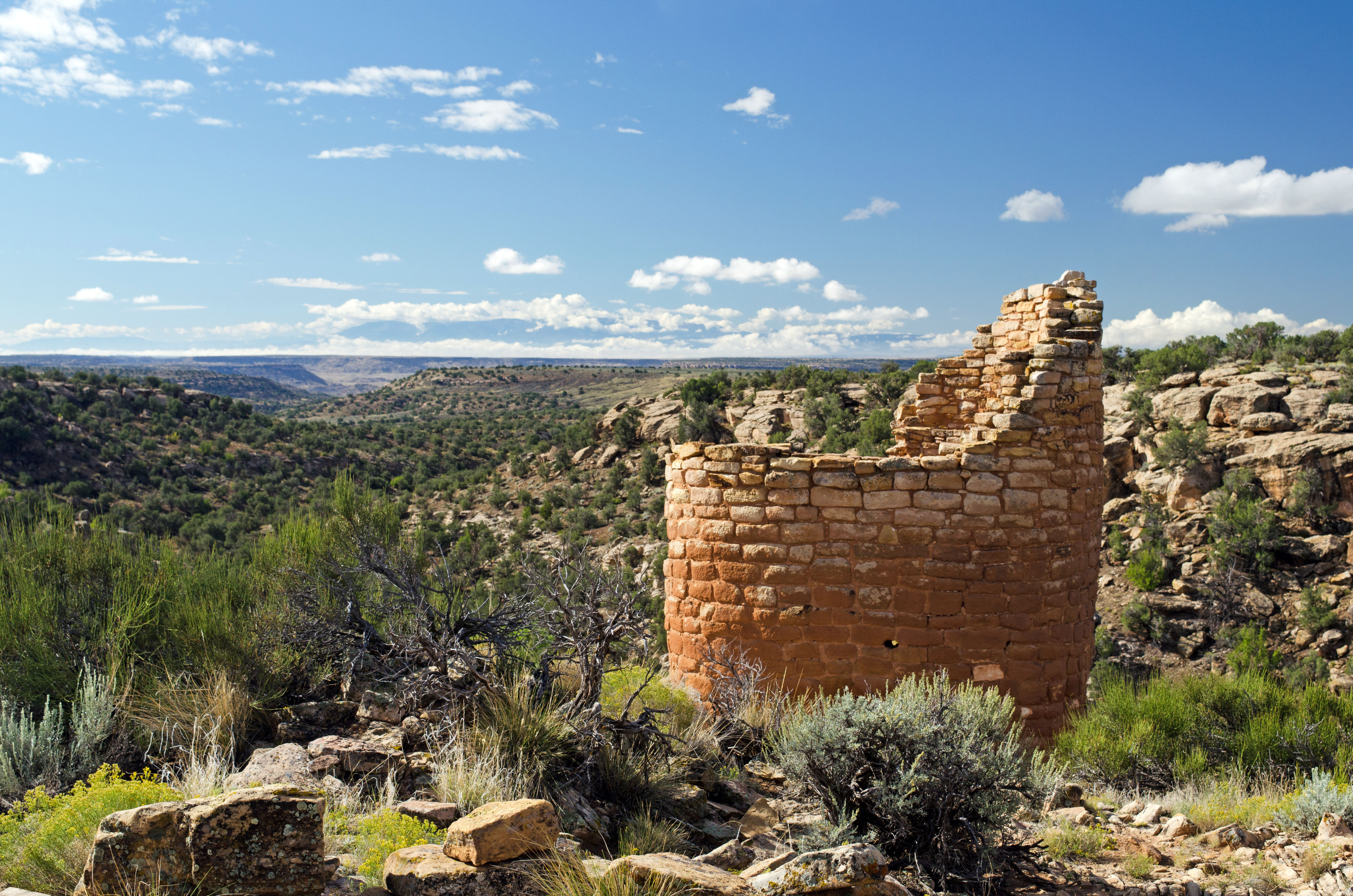
Horseshoe Tower
Horseshoe Tower is built on a point near the head of the canyon. From this tower, inhabitants could see clearly into Hackberry Canyon. At one time, the tower was walled off from the mesa top, raising questions about the use of such structures for defense. The unique stone towers and other buildings at Hovenweep are extremely fragile. To help preserve them, please remain on trail and do not enter or touch any structure.
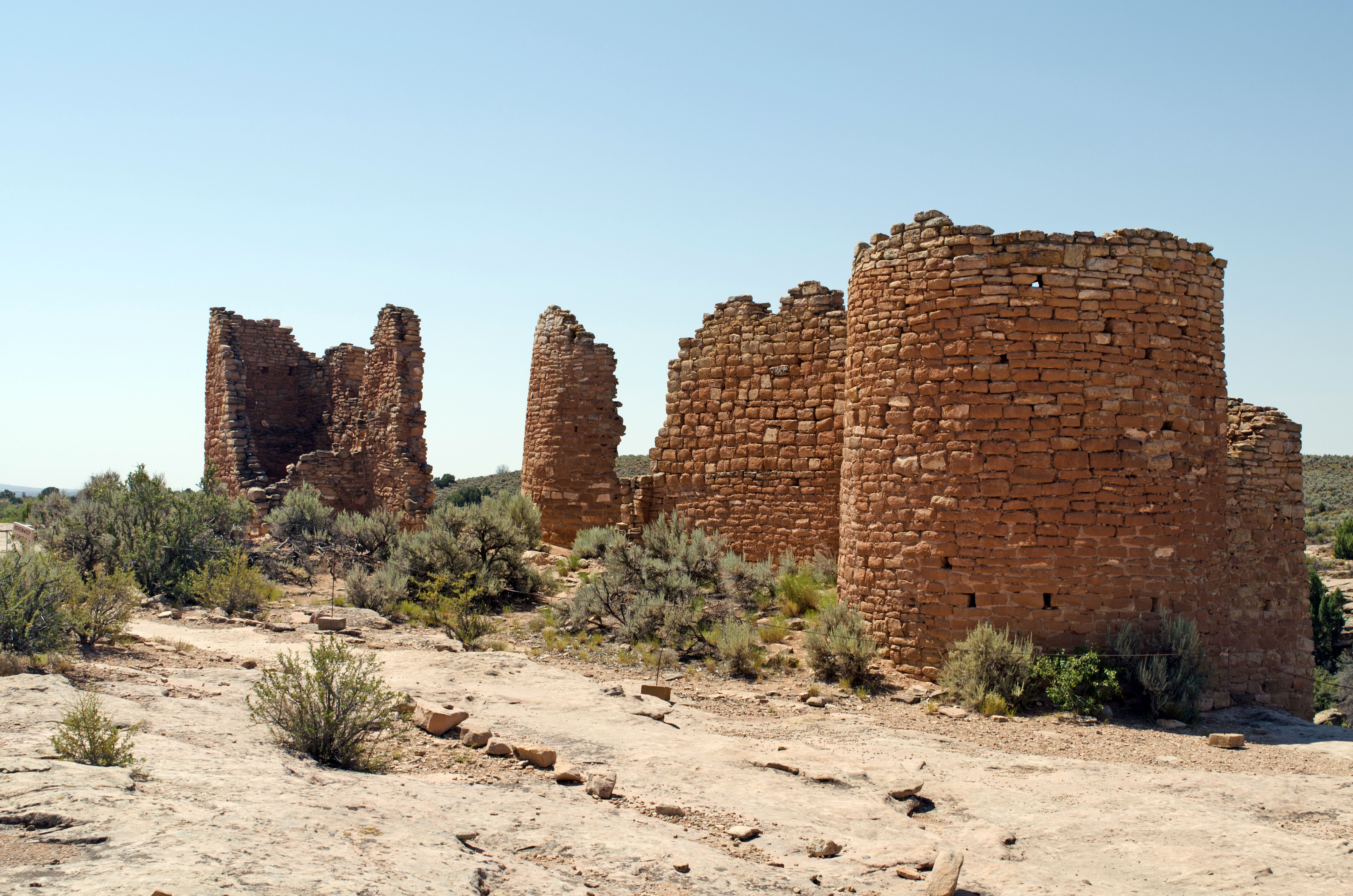
Hovenweep Castle
Hovenweep Castle consists of two D-Shaped towers perched on the rim near the canyon head. The stone walls, two and three courses thick, show detailed masonry techniques. Growth rings on a wooden beam in one tower indicate that the log was cut in 1277 CE (Common Era), one of the latest dates on any structure in the San Juan region. Castle is a name given by archeologists – no kings or queens lived here. The farmers who did live in the canyon may have used this large structure as a dwelling, a community center, spiritual center, or perhaps all three. Hovenweep Castle was top levels of a much larger complex that stair-stepped into the canyon, as evidenced by remaining rubble. Access among the levels was either carved hand and footholds in the rock or wooden ladders. The main entrance to Hovenweep Castle appears to be a rectangular doorway on the canyon rim. During the solstices and equinoxes, light enters the castle doorway and marks corners and doorways on the interior. The unique stone towers and other buildings at Hovenweep are extremely fragile. To help preserve them, observe proper site etiquette. Remain on marked trails. Do not enter or touch any structure. Do not touch or disturb any artifacts, including pottery sherds, arrow points, or rock art. Once removed from context, the story they tell is gone forever.
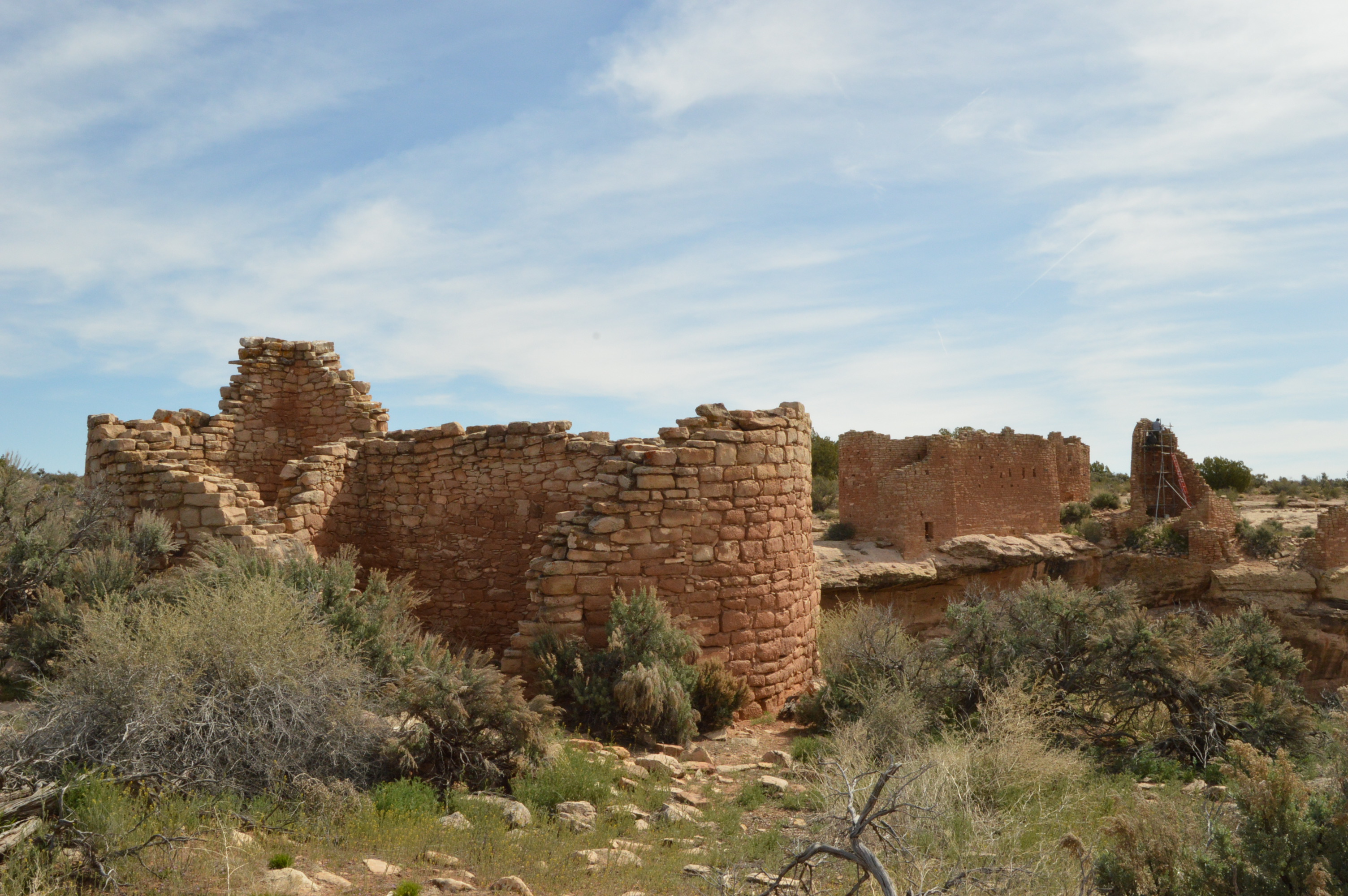
Hovenweep House
Hovenweep House was the center of the Square Tower group. What still stands was built on solid sandstone bedrock. The rest has crumbled to the ground, but a closer look at the rubble reveals its former size and pattern. As with other buildings in this area, the masons took great care with their stonework. Some boulders were pecked on the surface, a technique also seen at nearby MesaVerde. Small, flat rocks were inserted as spalls, or chinks, in the mortar joints. The walls may have been completely covered with thick layers of clay-based plaster. The unique stone towers and other buildings at Hovenweep are extremely fragile. To help preserve them, observe proper site etiquette. Remain on marked trails. Do not enter or touch any structure. Do not touch or disturb any artifacts, including pottery sherds, arrow points, or rock art. Once removed from context, the story they tell is gone forever.
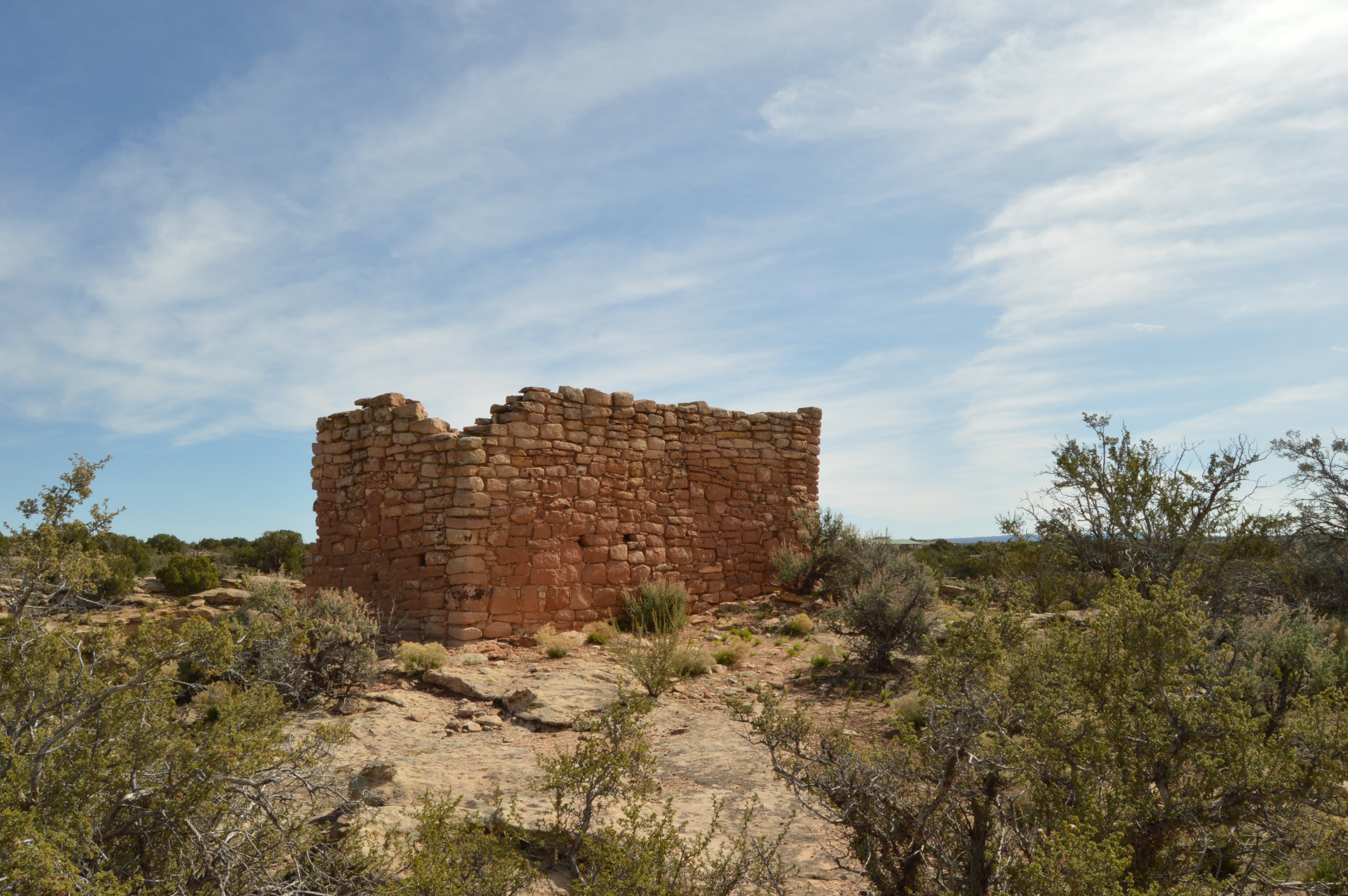
Rimrock House
Despite its name, Rimrock House may not have been a place where people lived, for it lacks any apparent room divisions. The structure is rectangular in shape and stands two stories high. Many small openings were placed in the walls, at unusual angles. Peepholes for seeing who might be coming for a visit? Observation ports for tracking the sun? Or maybe something as simple as ventilation? Their function remains unknown. In the canyon, you see the remains of Round Tower. It is almost perfectly circular and was probably two stories tall. The unique stone towers and other buildings at Hovenweep are extremely fragile. To help preserve them, please remain on trail and do not enter or touch any structure.
Visitor centers
Park stories
Park information courtesy of the National Park Service Data API.